

Julie Brumberg-Chaumont
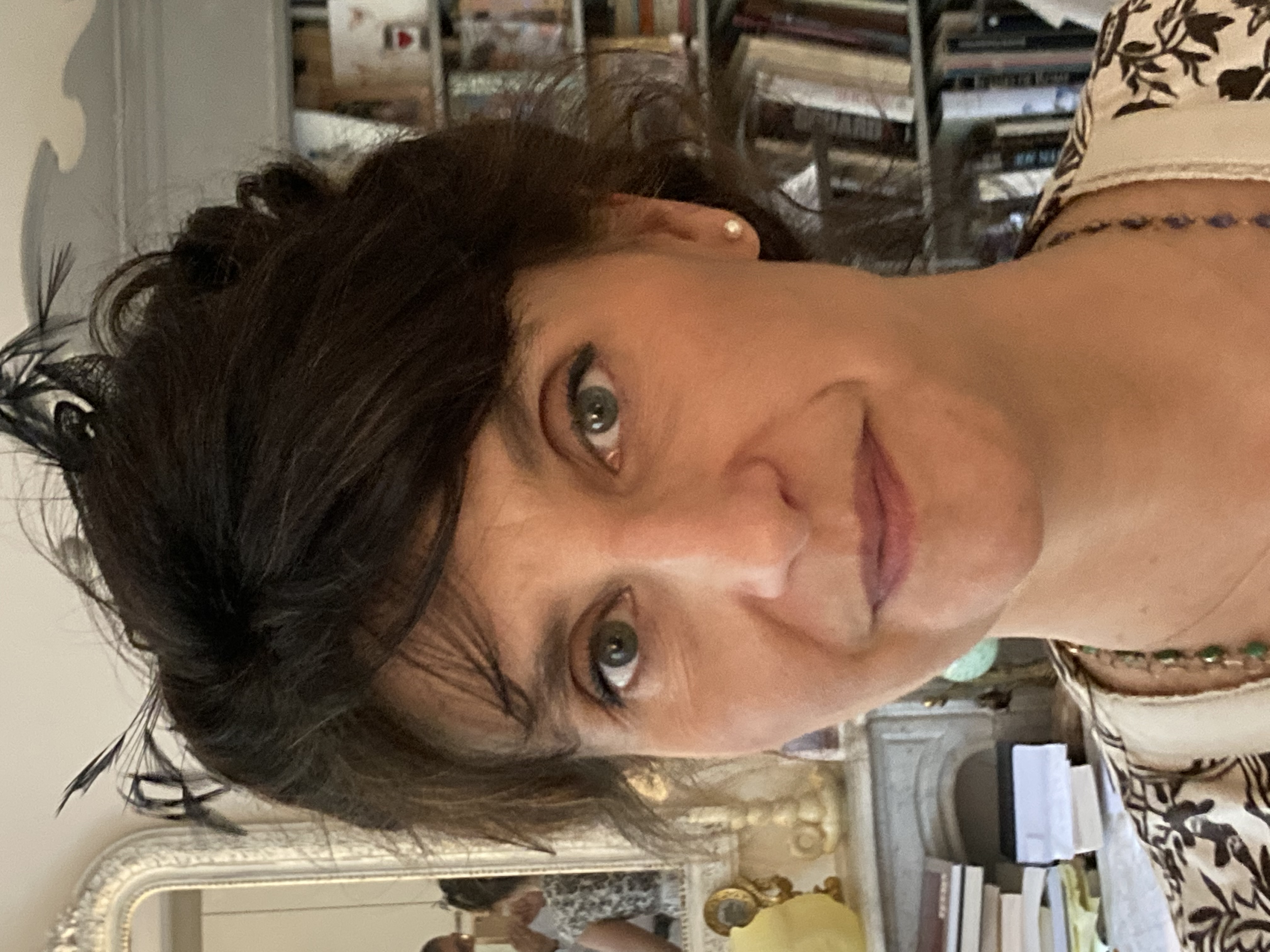
Julie Brumberg-Chaumont
Philosophy
Julie Brumberg-Chaumont is senior research fellow at the CNRS (PSL/ LEM, Paris) and Visiting Fellow at All Souls, Oxford (2026-2027), investigating medieval logical manuscripts from Oxonian provenience. She specializes in the history of linguistic ideas (proper names), logic, philosophy, and Aristotelian traditions in the Middle Ages. Over the past ten years, she has attempted at renewing the history of logic and promote an interdisciplinary, trans-periodic, cross-cultural and interdisciplinary cultural approaches to the study of logic, through her personal and collective work. She has been or is currently PI of the projects ‘Homo Logicus’ (2016-2023), ‘Europe de la Logique’ (2017-2020), ‘Pluralizing Logic (2024-2028)’, ‘Interlog Network’ (2025-). She is currently finishing a book about the social history of logic in the Middle Ages (Logic Education and Society in the Middle Ages) and working on the history of scientific doubting. Her publications include: Ad Notitiam ignoti. L’Organon dans la translatio studiorum à l’époque d’Albert le Grand (Brepols, 2013) ; (with D. Poirel) Adam of Bockenfield and his circle on Aristotle’ De memoria (Oxford University Press 2022) ; (with Claude Rosental, sociologist of logic), Logical skills. Social-Historical Perspectives, Springers, 2021 ; L'Europe de la Logique. Les traditions aristotéliciennes médiévales et modernes en contextes(forthcoming, Brepols ‘Studia Artistarum’).
Recently published papers :
- ‘The Philosophy of Logic according to Radulphus Brito and the Powers of Logic: Theories, Practices, Uses and Values of Logic’, in Ch. Girard, P. Emamzadah (eds.), The philosophy of Radulphus Brito, Turnhout, Brepols, collection ‘Studia Artistarum’, 2026, p. 31-69, in print.
- (With P. Bernardini), ‘Haec est sententia Averroys’. Albert the Great and the Masters of Arts on the Human Soul », Documenti e studi sulla tradizione filosofica medievale, XXVII, numéro spécial, e anima Humana, éd. P. Bernardini, 2026, p. 1-53, in print.
- ‘Les théories du nom propre : le nom propre entre grammaire et logique, de l’Antiquité au XIIe siècle’, in B. Bosredon, G. Kleiber, I. Tamba (eds.), Nomination, référence et signification à l’épreuve du nom propre, London, Iste Editions, 2026, p. 39-69.
- ‘Sémantique du nom propre aux XIIe et XIIIe siècles’, in B. Bosredon, G. Kleiber, I. Tamba (eds.), Nomination, référence et signification à l’épreuve du nom propre, 2026, p. 71-90.
- ‘Retours logiciens sur la méthode scolastique : la logique de la scolastique et les usages littéraires de la logique’, in V. Fasseur, J.-R. Valette (eds.), Littérature et pensée scolastique en France (XIIIe-XIVe siècles), Paris, Bauchesne, 2026, p. 73-115.
- ‘Ontological commitment, existential import, and descent to singulars in the sophisma ‘omnis homo de necessitate est animal’’, in A. de Libera, F. Goubier et L. Cesalli, (eds.), Sophismata: histoire d'une pratique philosophique, Schwabe, 2026, p. 155-203.
- ‘Logic and Metaphysics in the Thirteenth Century. A Conflict of Disciplines at the Faculty of Arts’, Transforming Philosophy. Late Medieval Knowledge in Transition, ed. K. Engel and U. Zahnd, Basel, 2026, p. 17-40. Free access online.
- ‘Disputational Theories and Practices of Science during the 13th Century’, in A. M. Mora Márquez (ed.), Revisiting Medieval Dialectic, Springer, coll. ‘Argumentation’, Basel, 2025, p.203-255.
- ‘Logique et théorie de la science au Moyen Âge’, in P. Wagner (ed.), Logique et épistémologie, Paris, Vrin, 2025, p. 145-172.
-‘Logique et action: la logique entre théorie et pratique’, in I. Zavaterro (ed.) Actio. Le rôle de l'action dans les disciplines à la Faculté des Arts de Paris au XIIIe siècle, special issue of the journal Medioevo. Rivista di storia della filosofia medievale, 2024, p. 39-88.
- (With J. Ashworth), ‘Medieval Theories of Singular Terms’, SEP, Stanford Encyclopaedia, 2024. (https://plato.stanford.edu/entries/singular-terms-medieval/#:~:text=A%2…).
- ‘La logique de la théologie comme science au xiiie siècle. La Summa theologiae de Thomas d’Aquin et l’invention de la forme du traité disputationnel de science ’, in O. Boulnois et al. (eds.), Connaître Dieu: Métamorphoses de la théologie comme science dans les religions monotheists, Turnhout, Brepols, BHESR, 2024, p. 305-337.
- ‘Les débuts de l’enseignement de la logique dans les studia dominicains et franciscains en Italie : une organisation précoce et innovante’, in J. Chandelier, A. Robert (eds.), Les savoirs dans les ordres mendiants (XIIIe-XVe s), Rome, École française de Rome, 2023, p. 29-113. Online : https://books.openedition.org/efr/50760
- ‘Raison et Logique au Moyen Âge’, in D. Poirel (ed.), La Raison au Moyen Âge, Paris, Vrin, 2023, p. 39-75.
- ‘When Logic Goes West (and Far-West)’, in S. Lapointe, E. H. Reck (eds), Historiography and the Formation of Philosophical Canons, Routledge, 2023, p. 29-51 (English updated version of the paper ‘À l’Est (et au Far-Ouest) de la logique’)
- ‘The Logic of Enthymemes as (Incomplete) Syllogisms: 13th-Century Theories and Practices’, in F. Mariani-Zini (ed.), The legacy of enthymeme. Proofs and Belief in the Middle Ages and in the Renaissance, London, Bloomsbury, London/New York/Dublin, 2023, p. 99-145.
- ‘Logical Hylomorphism in the Thirteenth Century’, in J.-Y. Béziau et al., (eds.), Logic in Question - Talks from the Annual Sorbonne Logic Workshop (2011- 2019), Birkhäuser/Springer, Basel, 2022, p. 17-34.
- ‘La raison défaillante des femmes au miroir de la pensée théologico-politique de Gilles de Rome : domination, déni d’éducation, confinement, silence’, in P. Bermon, D. Poirel (eds), La femme au Moyen Âge, Paris, Vrin, 2022, p. 137-174.